TfL Urged to Protect London Drivers’ Jobs as Driverless Cars Move Closer
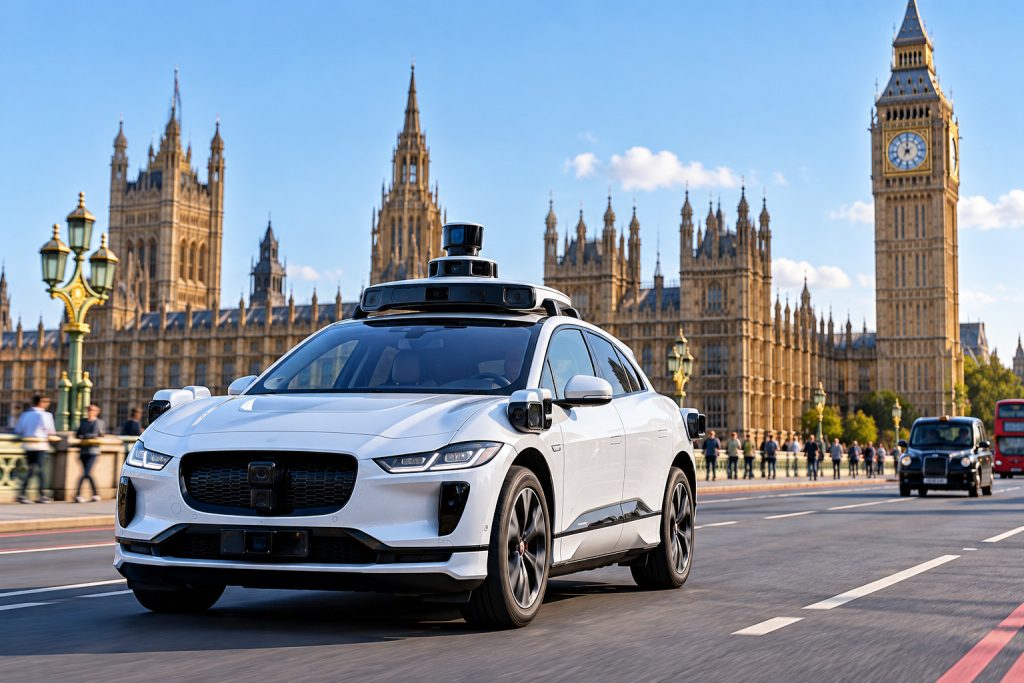
Autonomous SUV Before Big Ben - Image provided by AI
GMB Union has called for a plan to protect professional drivers from the potential impact of autonomous vehicles, following recommendations from the London Assembly Transport Committee.
Transport for London (TfL) and the Department for Transport are being urged to introduce measures to protect professional drivers as London prepares for the potential expansion of driverless passenger services.
The GMB Union has welcomed a report from the London Assembly Transport Committee examining the future of autonomous transport in the capital, particularly its recognition of the potential consequences for employment, passenger safety and accessibility.
The union is calling for a ‘just transition’ plan to ensure that taxi and private hire drivers are not disadvantaged by the introduction of automated passenger vehicles.
Such a plan could include retraining, opportunities for redeployment and measures to support workers whose livelihoods may be affected by advances in autonomous vehicle technology.
Concerns Over Jobs and Passenger Safety
London’s taxi and private hire sector provides an essential transport service, with drivers supporting commuters, visitors and passengTechers who require additional assistance.
While driverless vehicles could introduce new transport options, their deployment also raises questions about the future of driving jobs and the level of support available to passengers who depend on human assistance.
Matthew Wright, GMB Regional Organiser, said:
“GMB is pleased to see the Transport Committee recognise the impact autonomous vehicles could have on drivers’ jobs and their recommendation for a just transition plan.
“Support and protection for drivers, including retraining and redeployment opportunities, will be essential if autonomous vehicles become more widely available.
“We also welcome the recommendations on passenger safety, and particularly the experience of disabled passengers, who often rely on our members for assistance and reassurance only a human driver can provide.
“We have been calling on the Department for Transport and TfL to develop a plan for a just transition to driverless services, and we urge them to begin work on this prior to deployment.
“We look forward to working with TfL and the Transport Committee on the report’s recommendations to ensure London’s drivers have a voice and are not left behind.”
London Assembly Member Calls for Caution Over Robocabs
The potential impact of autonomous vehicles on London’s roads has also prompted concerns about congestion, public transport and the wider implications for the capital’s transport network.
Elly Baker, Londonwide Assembly Member and Labour’s Transport Spokesperson on the London Assembly, said the introduction of automated passenger vehicles must be considered carefully before widespread deployment is permitted.
She said:
“Automated Passenger Vehicles could have a significant impact on driving jobs here in London. We need to take that extremely seriously. Private hire drivers deliver an essential service to Londoners and we need to recognise that.
“I’ve been clear that we need to fully understand how these vehicles could affect congestion and safety on our streets before we agree to allow them to operate. If we don’t, then everyone from professional drivers to any Londoner who uses public transport could be affected.
“I want to see a more considered approach from all levels of government to protect livelihoods. We must not be afraid to say no to robocabs if we can’t make sure that the needs of all Londoners are met.”
What Happens Next for Driverless Transport in London?
The debate comes as autonomous vehicle technology continues to develop, with manufacturers and transport operators exploring how vehicles capable of driving without a human at the wheel could operate within urban environments.
Supporters of the technology point to the potential for improved mobility, more flexible transport services and advances in road safety. However, its introduction also presents challenges for regulators and transport authorities.
For London, key questions include how driverless services would integrate with existing public transport, whether they could increase traffic volumes and how passengers requiring assistance would be supported.
The GMB is calling for discussions about employment protections and passenger accessibility to take place before autonomous services become more widely available, rather than after workers have already been affected.
The union has also indicated its willingness to work with TfL and the London Assembly Transport Committee on the report’s recommendations.
The issue is likely to remain an important consideration as London develops its approach to autonomous transport and the potential introduction of commercial driverless passenger services.
—